
OROFACIAL MYOFUNCTIONAL THERAPY
Helping oral function work more efficiently.
OMT addresses patterns involving the tongue, lips, jaw, breathing, oral rest posture, chewing, and swallowing. Care is individualized and coordinated with other providers when needed.
Understanding OMT
Small patterns can affect everyday function.
At rest, the tongue, lips, and jaw have a typical relationship that supports nasal breathing, swallowing, and speech. When those patterns are disrupted, a person may compensate in ways that affect comfort, efficiency, or speech production.
Therapy may focus on awareness, coordination, strength when appropriate, oral rest posture, tongue placement, and carryover into daily activities.
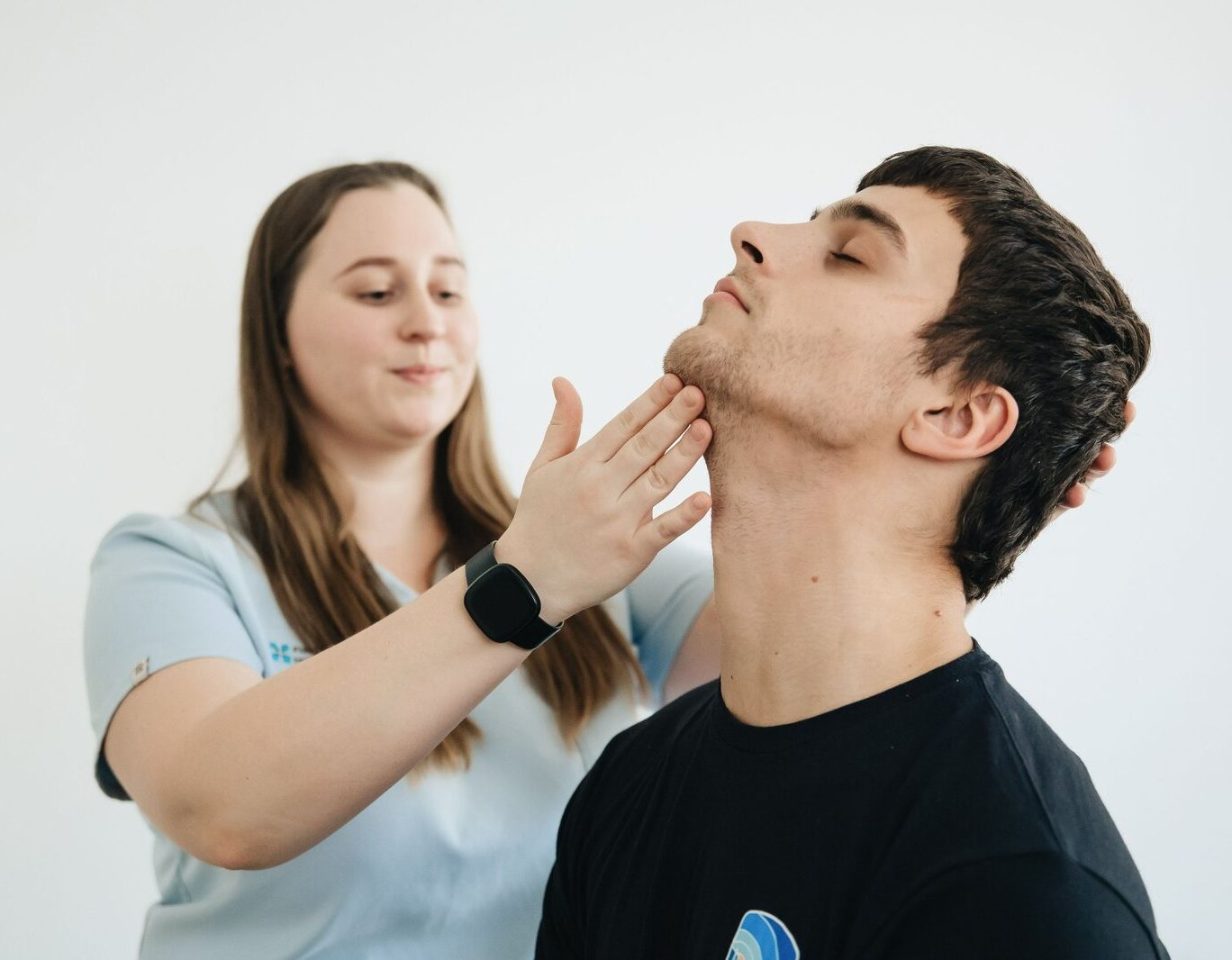
REASONS FOR REFERRAL
Concerns we may evaluate
Oral rest posture
Open-mouth posture, low or forward tongue resting position, difficulty maintaining lip closure, or patterns associated with mouth breathing.
Tongue thrust and swallowing
Forward tongue movement during swallowing, inefficient oral preparation, chewing concerns, or difficulty controlling and moving a bolus.
Speech sound concerns
Persistent sound errors—often involving sounds that require precise tongue placement—when oral function may be contributing.
Collaborative care
Pre- or post-procedure support and coordination with dentists, orthodontists, ENTs, physicians, and other appropriate professionals.
A COORDINATED APPROACH
Therapy is one part of the picture.
OMT does not replace medical, dental, orthodontic, or ENT care. When structural, airway, sleep, or medical concerns are suspected, we may recommend evaluation by the appropriate professional. Collaboration occurs with patient or caregiver permission.
Treatment recommendations are based on an individual evaluation. A referral concern does not automatically mean OMT is needed.
Ready to ask about an evaluation?
Contact our office to discuss the referral concern, scheduling, and current availability.