
ORAL-PHASE-SWALLOWING
Supporting safer, more efficient eating and swallowing.
The oral phase of swallowing is the part of the swallowing process that takes place in the mouth. It involves the coordinated movement of the tongue, lips, cheeks, and jaw to bite, chew, gather, control, and move food or liquid toward the back of the mouth in preparation for swallowing.
UNDERSTANDING THE ORAL PHASE
Chewing and swallowing depend on coordinated movement.
The lips, tongue, cheeks, and jaw work together to manage food and liquid. Difficulties with strength, coordination, sensation, oral structure, tongue movement, or compensated patterns may make eating less efficient or comfortable.
Assessment looks beyond a single movement. We consider oral rest posture, breathing and airway history, chewing, bolus formation and control, tongue movement, and how these skills affect everyday function and oral development.
REASONS FOR REFERRAL
Concerns we may evaluate
Chewing difficulties
Limited or inefficient chewing, difficulty moving food from side to side, prolonged mealtimes, or fatigue with eating.
Bolus control
Difficulty gathering, containing, or moving food and liquid through the mouth, including food remaining in the mouth after a swallow.
Tongue and oral movement
Reduced tongue range of motion, coordination, or stability; forward tongue movement; or patterns that interfere with efficient oral preparation and transit.
Everyday function
Messy eating, food loss from the lips, difficulty progressing through textures, or oral swallowing patterns that affect comfort and participation.
EVALUATION AND TREATMENT
Care begins with understanding the pattern.
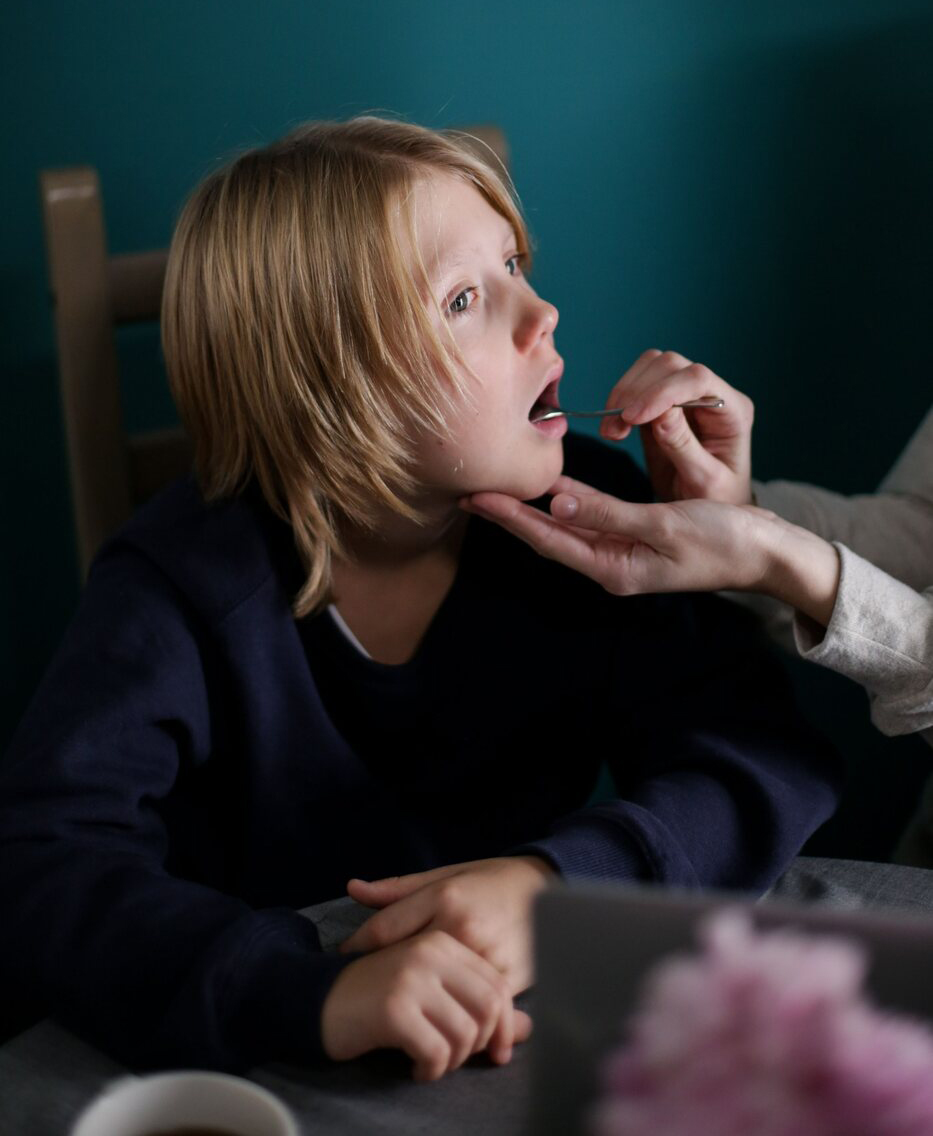
An evaluation may include review of medical and feeding history, examination of the lips, tongue, jaw, palate, and oral movement, and observation of eating and drinking when appropriate.
Treatment is individualized and may address chewing, bolus gathering and control, tongue coordination, oral containment, movement of food from front to back, and carryover into functional meals. Recommendations are based on the patient’s age, needs, safety, and evaluation findings.
COORDINATED CARE
Some concerns need more than one perspective.
Oral-phase therapy does not replace medical evaluation or treatment. If symptoms suggest concerns involving the pharyngeal phase of swallowing, airway, breathing, sleep, nutrition, gastrointestinal function, or oral structure, we may recommend collaboration with the patient’s physician or another appropriate professional.
A clinical evaluation helps determine whether oral-phase therapy is appropriate and whether additional assessment or referral is recommended.
Have questions about chewing or swallowing?
Contact our office to discuss the referral concern, required paperwork, and current waitlist.